
- Botanical name
- Melissa officinalis L.
- Plant family
- Lamiaceae
- Parts traditionally used
- Leaf (folium), harvested from the aerial parts
- Also known as
- lemon balm, melissa, balm, sweet balm, bee balm
- Traditional preparations
- Herbal tea (infusion) from the dried leaf; tincture and other liquid or dry leaf extracts
- Flavour & aroma
- Bright, softly lemony and green, with a faint honeyed sweetness and a gentle, rounded finish — citrus rather than menthol
- Traditional herbal actions
- Traditionally described in Western herbal practice as a nervine, a carminative and an aromatic
- Body systems
- Nervous system · Digestion
Quick apothecary snapshot
At a glance
Some plants announce themselves. Lemon balm simply waits at the edge of the garden bed until you brush past it, and then the whole afternoon smells faintly of lemons.
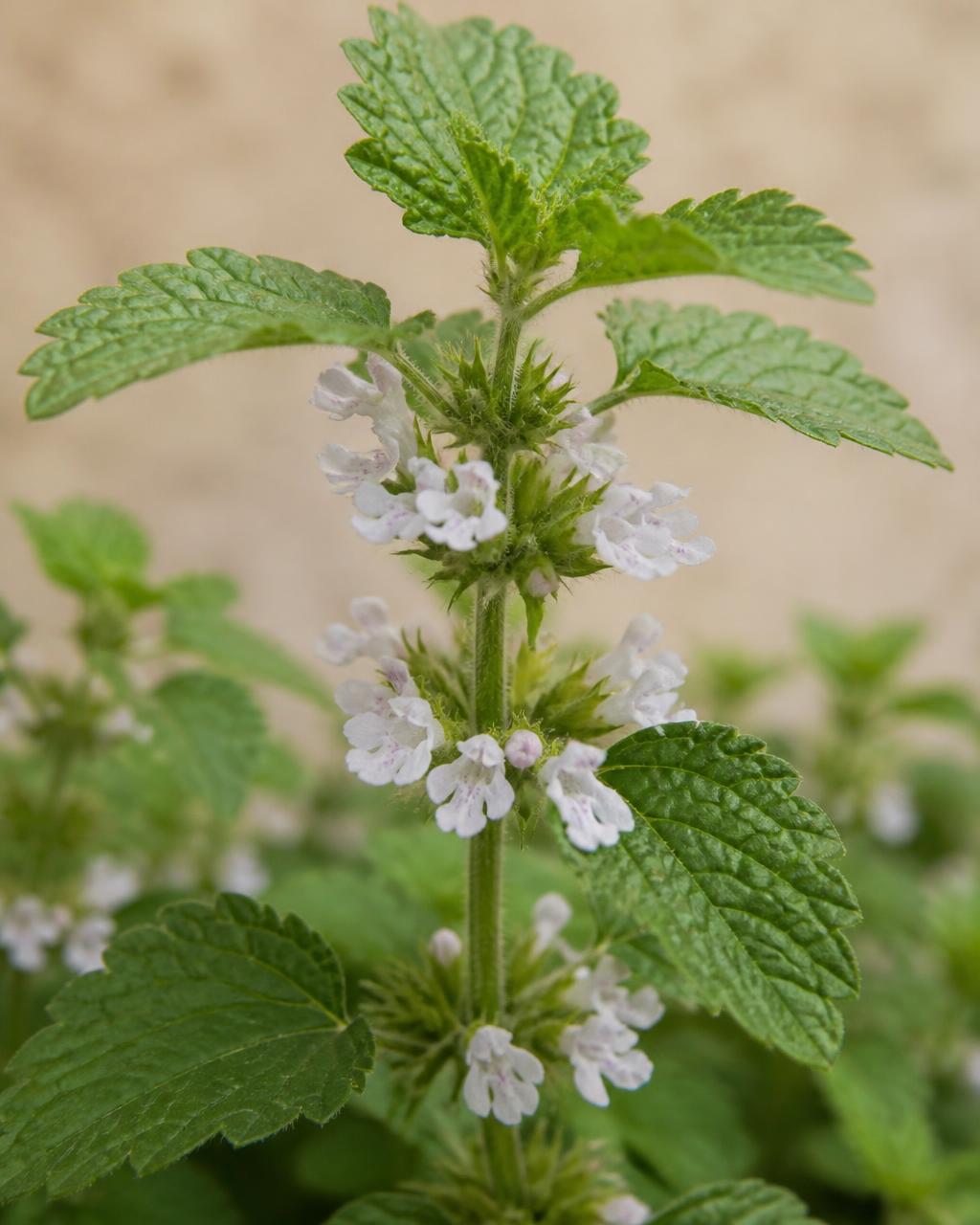
It is one of the oldest cultivated herbs of the European garden, grown for centuries beside doorways and kitchen paths where a person could reach out and take a leaf on the way past. Its botanical name, Melissa, comes from the Greek word for honeybee — a nod to the bees that gather at its small pale flowers through summer.
In traditional European and Western herbal practice, lemon balm has long been associated with calm, with ease after eating, and with the quiet end of the day. It is a plant worth knowing — not because it promises anything dramatic, but because it is gentle, familiar, and easy to weave into an ordinary evening.
Meet this plant
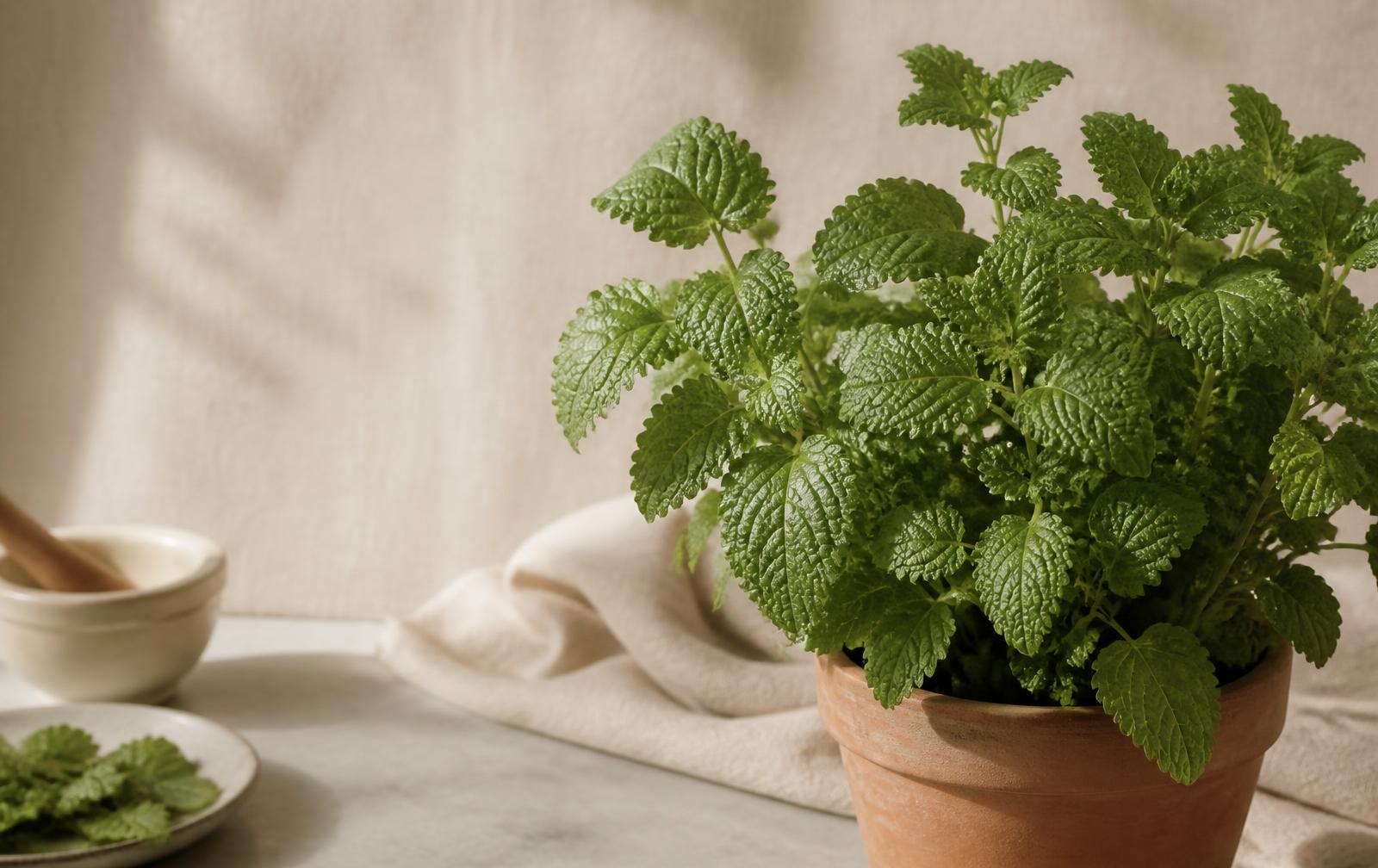
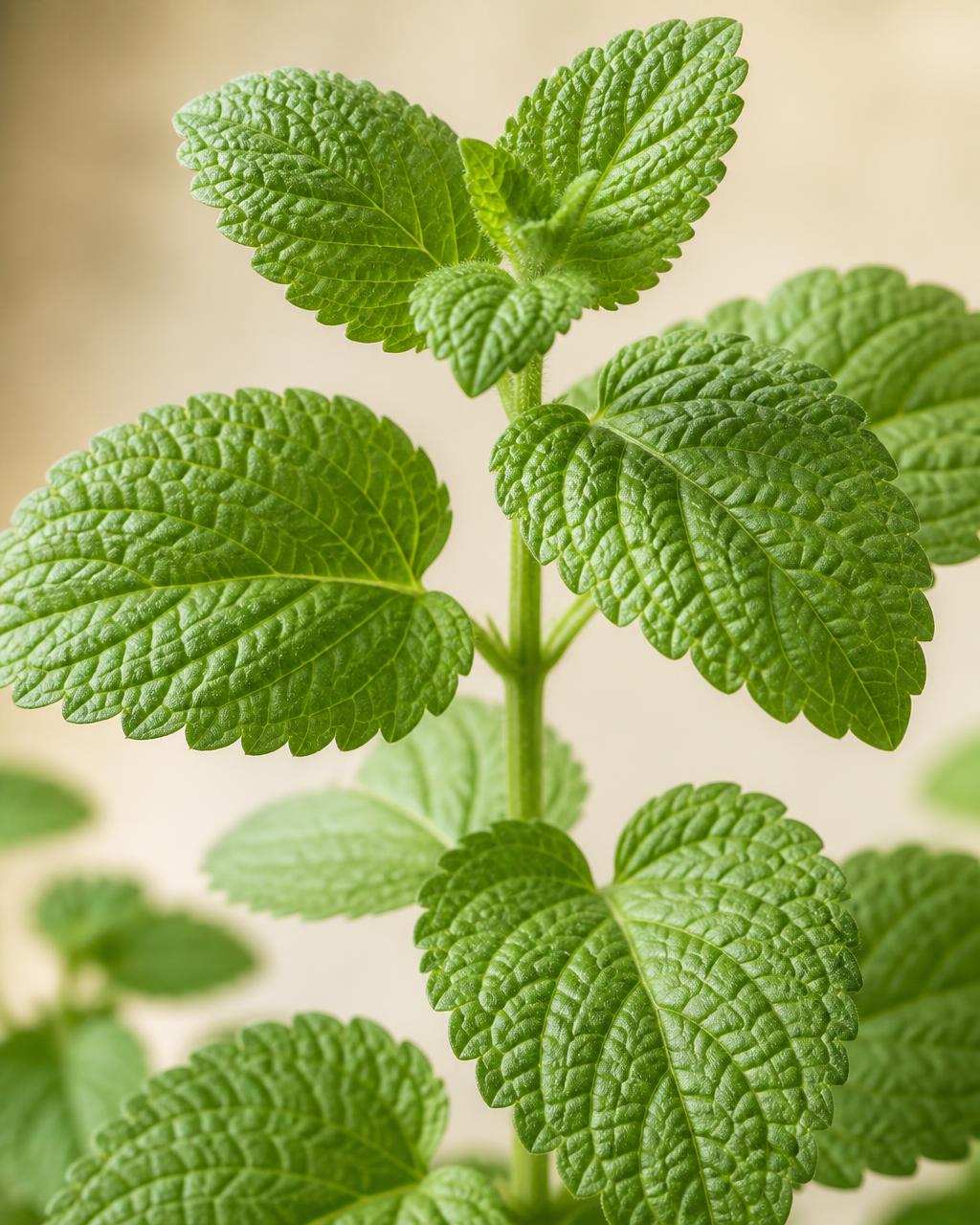
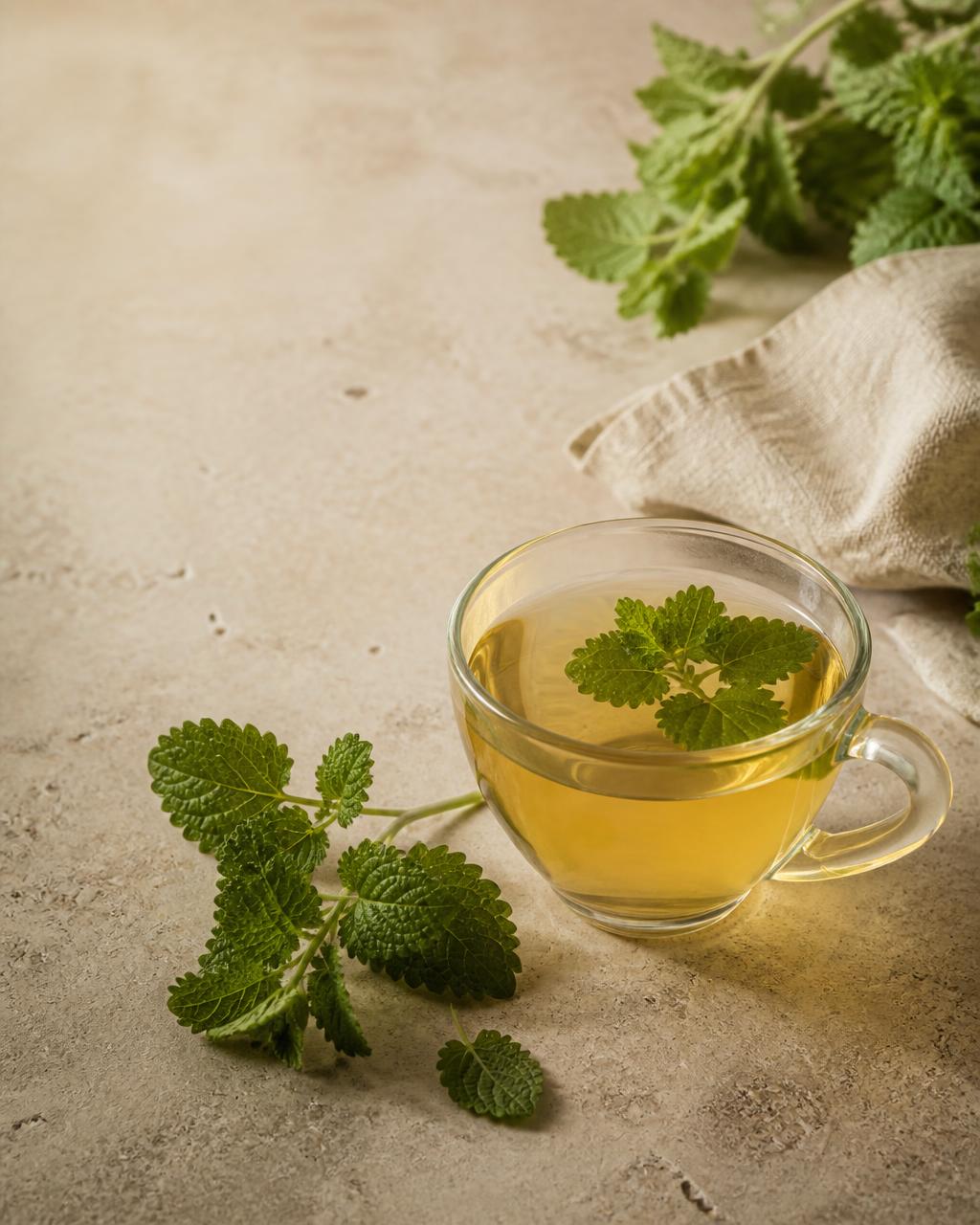
Melissa officinalis is a soft-stemmed perennial in the Lamiaceae — the mint family — and it wears the family's signature features plainly. Run your fingers down a stem and you will feel four distinct edges: square in cross-section, as mints are. The leaves grow in opposite pairs, heart-shaped to oval, deeply net-veined and crinkled, with scalloped, toothed margins and a scattering of fine hairs.
The lemon in lemon balm Crush a leaf and the scent arrives immediately: lemony, green, faintly sweet. That aroma comes from volatile oil held in tiny glands on the leaf surface, which is why lemon balm is best handled gently and briefly, and why a covered cup matters when you brew it. Despite belonging to the mint family, it carries none of peppermint's cool menthol bite — the character is citrus, not cool.
Where it grows Lemon balm is native to south-central Europe, the Mediterranean basin and parts of western Asia, and has been carried by gardeners so widely that it is now naturalised across much of the temperate world, including many parts of Australia. It is generous, self-seeding, and inclined to make itself at home.
What is used Western herbal practice uses the leaf, gathered from the aerial parts of the plant. Leaves are traditionally harvested before or at the beginning of flowering, when the plant's aromatic character is at its most pronounced, then dried quickly out of direct sunlight and stored airtight, away from light and heat, to protect the volatile oils that give the herb its scent.
Traditional herbal wisdom
Lemon balm has one of the longer continuous records of use in European herbal medicine. It appears in the writings of classical and mediaeval physicians, was grown widely in monastery and cottage gardens, and became a fixture of the European domestic apothecary — a plant of the household rather than the pharmacy.
Across those traditions, it was most often associated with three things: lifting the spirits, easing the nervous system, and settling the digestion. The seventeenth-century English herbalists wrote about it in the language of their time, describing balm as a herb to make the heart merry and drive away melancholy. That is historical language, and it is worth reading as such — a record of how people understood the plant, not a clinical description.
Its traditional standing is recognised formally in Europe today. The European Medicines Agency's herbal monograph on Melissa officinalis leaf lists it as a traditional herbal medicinal product, on the basis of long-standing use rather than clinical trial evidence, for the relief of mild symptoms of mental stress, to aid sleep, and for the symptomatic relief of mild digestive complaints including bloating and wind.
Traditional use describes how this has been used historically in Western herbal medicine. It is context, not a claim of treatment.
Nervous system connection
If lemon balm is known for anything, it is for the evening.
In Western herbal tradition, plants are grouped by what herbalists have observed them to do, and lemon balm sits firmly in a group described as the nervines — herbs traditionally associated with the nervous system and with a settled, unhurried feeling. It has historically been considered one of the gentler members of that group: unremarkable, pleasant, and suited to everyday use rather than to anything dramatic.
In plain languageWhat is a nervine?Open
Why the evening Part of what lemon balm offers is sensory. Aroma is one of the fastest cues we have; it arrives before thought. A warm cup, a familiar smell, a chair by a lamp — these are signals to the body that the doing part of the day is finished.
At Wild Wellness we think about this as building a transition. Most of us move from stimulation straight to sleep with nothing in between, and then wonder why the mind is still talking. A herbal infusion is a beautifully low-effort way to mark the edge between activity and rest: it takes ten minutes, it asks nothing of you, and it happens at roughly the same time each night, which is exactly the kind of small repeated rhythm the body reads well.
Rest is rarely a decision. It is usually a sequence of small signals.
Digestive connection
Lemon balm is an aromatic herb, and in Western herbal tradition aromatic plants of the mint family have long been associated with digestive comfort — particularly the settled, unclenched feeling after a meal. It was traditionally taken as a warm infusion after eating, and this use is reflected in its European traditional-use monograph, which covers the symptomatic relief of mild digestive complaints such as bloating and wind.
In plain languageWhat does carminative mean?Open
There is a lovely practicality to this tradition: the same cup of tea that closes an evening also happens to be taken after the last meal of the day. One ritual, two long-held uses.
Key constituents
Lemon balm has been studied chemically in some detail. Knowing what is in a plant is useful — but a constituent is not an outcome, and the presence of a compound never tells us on its own what a cup of tea will do.
Volatile (essential) oil The source of the aroma. Lemon balm's volatile oil is characteristically rich in citral — a pairing of the compounds geranial and neral — along with citronellal, and smaller amounts of linalool and caryophyllene. This is the fraction responsible for the lemony scent, and the reason the plant is handled and stored so carefully. What remains uncertain: volatile oil content is genuinely variable, shifting with growing conditions, harvest timing and drying. A home infusion also extracts only a small portion of it, which is one reason a cup of tea and a concentrated extract should never be assumed to be equivalent.
Rosmarinic acid and related phenolic acids Rosmarinic acid is the most discussed non-volatile constituent of lemon balm, alongside caffeic and chlorogenic acids. It is water-soluble, which means it is well represented in an ordinary infusion, and it is a major reason researchers are interested in the plant. What remains uncertain: most of what is known about rosmarinic acid comes from laboratory work. How much is absorbed, what it does in the human body, and at what intake, remain open questions.
Flavonoids and triterpenes Lemon balm also contains flavonoids and triterpene acids. These are common across the mint family and contribute to the plant's overall profile. What remains uncertain: their individual contribution to any observed effect of the whole herb has not been established.
The tea cup
Lemon Balm as a Daily Ritual
The dried leaf makes a pale golden-green infusion with a soft citrus lift — lemony, faintly sweet, grassy underneath, and rounder than you might expect. There is no menthol coolness and no bitterness to speak of, which makes it one of the easiest herbal teas to fall in love with, and one of the few that most children and most tea-sceptics will happily drink.
Much of the pleasure is in the aroma. Cover the cup while it steeps and lift the lid before the first sip: the scent gathers, and that moment is half the ritual.
Herbs it sits beautifully beside Traditional Western herbal blending pairs lemon balm easily, because its citrus note lifts almost everything: - Chamomile — soft, apple-sweet, the classic evening companion - Lavender — floral and aromatic; a light hand is plenty - Peppermint or spearmint — brighter and cooler, lovely after a meal - Lemon verbena or lemongrass — deepens the citrus without sharpening it - Rose petals — gentle and floral, for a slower, prettier cup
When you might reach for it After dinner, while the kitchen is being tidied. In the last hour before bed, with the lights low. Mid-afternoon, when the day has been loud. Iced with a slice of lemon in summer. None of this is prescriptive — it is simply a plant that suits the quieter parts of the day.
A Wild Wellness ritual
THE EVENING EXHALE
A small, unremarkable practice. It takes about fifteen minutes and asks nothing of you.
- Put the phone in another room. Not face down — another room.
- Lower the lights. Lamps rather than overheads, if you have them.
- Boil the kettle and make a warm herbal infusion. Cover the cup while it steeps.
- Sit somewhere comfortable. A chair, the back step, the end of the bed.
- Lift the cup and notice the aroma before you drink. Just for a moment.
- Drink slowly. Let the day become quieter around you.
Here is the part worth saying plainly: most of the value in this ritual is the ritual. Reducing light and noise, putting down the screen, sitting still and marking the end of the day are meaningful in their own right — with any warm drink, or with none at all. The herb is the invitation, not the mechanism.
Do it three nights in a row and it stops being a task. That repetition — the same cue at roughly the same hour — is what makes it a rhythm rather than a good intention.
A gentle everyday practice, offered for enjoyment and rhythm — not as treatment.
Grow your own apothecary
Grow Your Own Apothecary
Lemon balm is one of the kindest plants to begin with. It is a hardy perennial, it forgives neglect, and a single plant will give you more leaf than one household can drink.
- **Light** — full sun to part shade. In hotter Australian gardens, afternoon shade keeps the leaves greener and softer.
- **Soil and water** — moist but well-drained. It prefers not to dry out completely, and sulks briefly then recovers if it does.
- **Climate** — grows across a wide range of temperate and warm-temperate conditions. It dies back in cold winters and returns in spring.
- **In a pot** — excellent, and arguably preferable. Lemon balm self-seeds enthusiastically and can spread further than invited; a large pot by the back door keeps it contained and within arm's reach.
- **Harvesting** — pick leaves and soft stem tips through the growing season, ideally before or as flowering begins. Cutting the plant back encourages fresh growth and delays flowering.
- **Drying and storing** — dry quickly in a warm, airy, shaded spot; direct sun and slow drying both cost you the aroma. Store the dried leaf whole in an airtight jar away from light and heat, and crush it only as you use it. Trust your nose: if it no longer smells of lemons, it has given what it has.
Herbal preparations
Lemon balm is prepared in a handful of traditional forms, and they are not interchangeable — each extracts a different balance of the plant, in a different strength.
Infusion The dried or fresh leaf steeped in freshly boiled water, covered. The domestic, everyday form, and the one reflected in most traditional household use. Water extracts the plant's water-soluble constituents well; covering the cup limits how much of the aromatic oil escapes with the steam.
Tincture The leaf extracted in a mixture of alcohol and water, producing a concentrated liquid taken in small measured doses. This is a practitioner-strength preparation and belongs with individual professional guidance.
Glycerite An alcohol-free extract made using vegetable glycerine, sweet in taste and often chosen where alcohol is unsuitable. Its extraction profile and strength differ from a tincture.
Culinary use Fresh leaves are used in cooking — torn through fruit salads, steeped in cream or syrups, added to cold water with lemon. A generous, everyday food use with a long domestic history.
Aromatic use The fresh plant brushed or crushed in the garden, or fresh leaves in a bowl of hot water. Simple, sensory, and free.
Preparation styles are described for general understanding only. Extraction and dosing of concentrated herbal medicines belong with a qualified practitioner.
What does the research say?
Lemon balm is one of the better-studied gentle herbs, and it is also a good example of why "studied" and "proven" are not the same word.
Traditional knowledge Centuries of documented European and Western herbal use, focused on calm, sleep and digestive comfort. This tradition is formally recognised in the European Medicines Agency's herbal monograph on Melissa officinalis leaf — but recognised specifically as traditional use, meaning the registration rests on long-standing use and safety, not on clinical trial evidence.
Laboratory and preclinical research Most published work on lemon balm sits here: laboratory studies of its constituents, particularly rosmarinic acid and the volatile oil, and animal studies. This work is how researchers generate ideas about a plant. It cannot tell us what a herbal tea does in a person, and preliminary laboratory findings are frequently not confirmed in humans.
Human research Small human trials of lemon balm preparations have been conducted, largely examining mood, cognitive performance, stress-related measures and sleep quality. The overall picture is genuinely preliminary: studies are typically small, short, and use standardised extracts at doses quite unlike a home-brewed cup of tea. We are not going to summarise individual results here until each study has been read, verified and referenced properly.
What we still don't know - Whether an ordinary infusion delivers anything comparable to the standardised extracts used in research - How lemon balm's constituents behave once absorbed, and at what intake - What consistent, longer-term everyday use does, if anything - How much of the reported benefit in trials reflects the herb and how much reflects rest, expectation and the ritual around it — a question worth asking of every calming herb
Research is summarised in plain language. Where studies are cited, they appear in full below — nothing is referenced that has not been verified.
Safety and considerations
General considerations
Lemon balm has a long history of food and beverage use and is generally regarded as a gentle herb when consumed as a traditional tea. That said, "gentle" is not the same as "irrelevant" — anything with an effect deserves consideration, and the notes below are deliberately conservative.
Culinary and tea use sits in a different category to concentrated extracts, standardised supplements and essential oil, which should be discussed with a qualified practitioner.
Cautions
European traditional-use registration applies to adults and adolescents. Use of concentrated preparations is not appropriate without individual guidance, and lemon balm should not be used in place of investigation or treatment for a diagnosed condition.
Pregnancy and breastfeeding
European regulatory guidance advises that lemon balm preparations are not recommended during pregnancy or breastfeeding, because safety in these situations has not been established. Occasional culinary use of the fresh leaf is a separate question — but if you are pregnant or breastfeeding, please check with your practitioner before using lemon balm as a herbal medicine.
Children
The European traditional-use monograph for lemon balm leaf applies to adults and adolescents over 12 years, as use in younger children has not been established in that framework. Please seek individual practitioner advice before giving herbal preparations to children.
Medications and interactions
Verified detail is still being compiled for this field. Some clinical references discuss theoretical interactions between lemon balm and sedative or thyroid medications; we are verifying the primary sources before publishing specifics here, rather than repeating them second-hand.
In the meantime, the safe general rule: if you take prescription medication — particularly sedatives, sleep medication or thyroid medication — speak with your pharmacist, GP or naturopath before using concentrated lemon balm preparations.
Allergy and sensitivity
Lemon balm belongs to the Lamiaceae (mint) family. As with any plant, individual sensitivity or allergy is possible; if you have a known sensitivity to plants in this family, approach with care and discontinue if any reaction occurs.
When to seek practitioner guidance
- If you are pregnant, trying to conceive, or breastfeeding
- Before giving any herbal preparation to a child
- If you take prescription medication of any kind, particularly sedatives, sleep or thyroid medication
- If you are considering a tincture, standardised extract or essential oil rather than tea
- If sleep, mood, stress or digestion have been difficult for more than a few weeks — that deserves proper individual assessment, not a herbal tea
From the bench
Sarah's apothecary note
Written & curated by Sarah — Naturopath
Verified sources onlySources and further reading
European Union herbal monograph on Melissa officinalis L., folium
Committee on Herbal Medicinal Products (HMPC) · European Medicines Agency · 2013
Regulatory herbal monograph · Accessed August 2026
Lemon Balm — About Herbs, Botanicals & Other Products
Integrative Medicine Service · Memorial Sloan Kettering Cancer Center
Clinical reference database · Accessed August 2026
Melissa officinalis L. — botanical record and distribution
Royal Botanic Gardens, Kew · Plants of the World Online
Botanical reference · Accessed August 2026
Botanical details
Related reading
Herbs, nutrients, recipes, nervous system and lifestyle reading, and Wild Wellness rituals connected to this entry.
Follow the thread
Where this plant leads next
Being written next
- Nervous systemUnderstanding the Nervous System
- NervinesWhat Does "Nervine" Mean?
- SleepCreating an Evening Wind-Down
- Lifestyle medicineMorning Light & Circadian Rhythm
- HerbsPassionflower
- HerbsLavender
- NutrientsMagnesium
- RitualsThe Evening Exhale
Curious about lemon balm?
Ask the Wild Wellness Assistant
A calm, educational conversation drawn from this library. It won’t diagnose, prescribe or invent research — where something hasn’t been verified, it will say so.
Reviewed and curated using the educational framework developed by Sarah, qualified naturopath. This entry is general educational information. It does not diagnose, treat, cure or prevent any condition, and it is not a substitute for individualised advice. If you are pregnant, breastfeeding, taking medication or caring for a child, please speak with a qualified practitioner.