

What Is the Gut Microbiome?
An introduction to the ecosystem living quietly inside you, and why naturopaths pay such close attention to digestion.
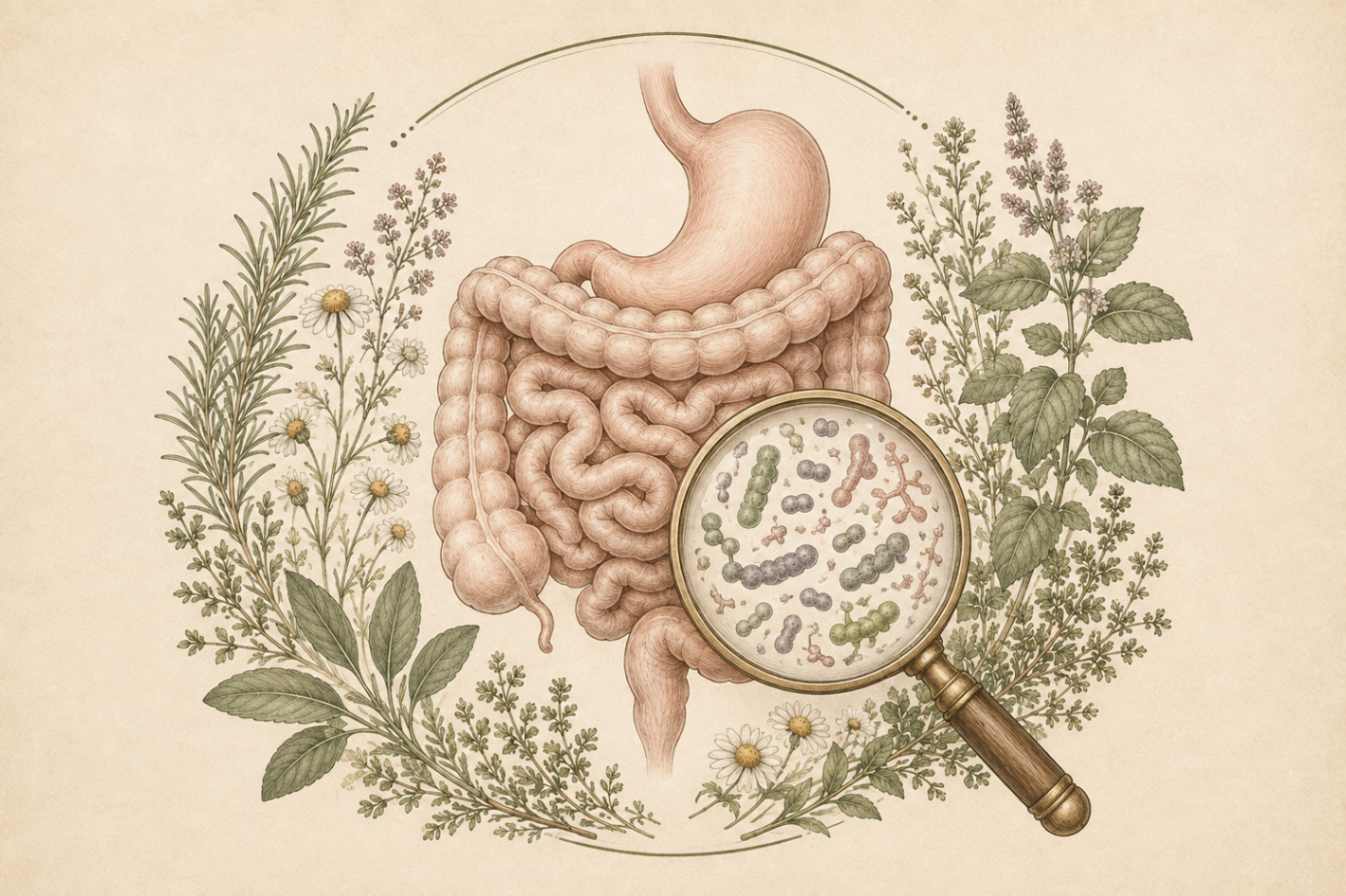
Your digestive tract is home to an enormous community of bacteria, fungi and other microorganisms. Collectively, this community is known as the gut microbiome — and research continues to explore its relationships with digestion, immune function, the nervous system and the skin.
Diversity and richness
Two words come up often in microbiome research: diversity (how many different types of organisms are present) and richness (how abundant they are). Broadly, a varied, fibre-rich, largely whole-food way of eating is associated with a more diverse microbial community.
Digestion is rarely an isolated story. It sits alongside sleep, stress, nourishment and rhythm.
When the balance shifts
The term dysbiosis is used to describe an imbalance in this community — reduced beneficial flora, or an overgrowth of opportunistic organisms. It describes a pattern rather than a diagnosis, and it is only meaningful when considered alongside how you actually feel.
Short-chain fatty acids
When gut microbes ferment dietary fibre, they produce short-chain fatty acids such as butyrate. This is one of the more elegant examples of the relationship between what we eat and the community that lives within us, and these markers are commonly included in comprehensive stool profiles.
The gut, the nervous system and the skin
The gut–brain and gut–skin conversations are active areas of research. In practice, this is part of why Sarah asks about digestion even when someone has come in about their energy, their mood, their cycle or their skin.
What testing can explore
Where clinically relevant, Sarah may discuss comprehensive microbiome assessment through NutriPATH — you can read more in Functional Pathology Testing Explained. Testing is optional, and it is never the starting point on its own.
Common questions
What is the gut microbiome?
The gut microbiome is the community of bacteria, fungi and other microorganisms living in your digestive tract. Research continues to explore its relationships with digestion, immune function, the nervous system, skin and overall wellbeing.
What does dysbiosis mean?
Dysbiosis is a general term describing an imbalance in the microbial community of the gut — for example reduced diversity of beneficial organisms, or an overgrowth of opportunistic ones. It is a description of a pattern rather than a medical diagnosis.
What are short-chain fatty acids?
Short-chain fatty acids such as butyrate are produced when gut microbes ferment dietary fibre. They are one of the ways in which fibre-rich foods and the microbiome interact, and they are commonly measured in comprehensive stool profiles.
What can comprehensive stool testing tell us?
Depending on the profile, comprehensive stool testing can look at microbial diversity and richness, beneficial flora, opportunistic organisms, bacterial pathogens, fungi, parasites and H. pylori, alongside functional markers such as short-chain fatty acids, calprotectin, pancreatic elastase, secretory IgA, zonulin and faecal pH.
Is there a connection between gut health and skin?
The gut–skin and gut–brain relationships are active areas of research. Naturopathically, Sarah considers digestion as part of the whole picture rather than treating skin or mood concerns in isolation.
General education only, not medical advice, diagnosis or treatment. For an individualised approach, read about naturopathic care with Sarah.