

Gut Health & Your Skin
Skin is influenced by far more than what we put on it. Here is what the gut–skin connection does — and doesn’t — tell us.
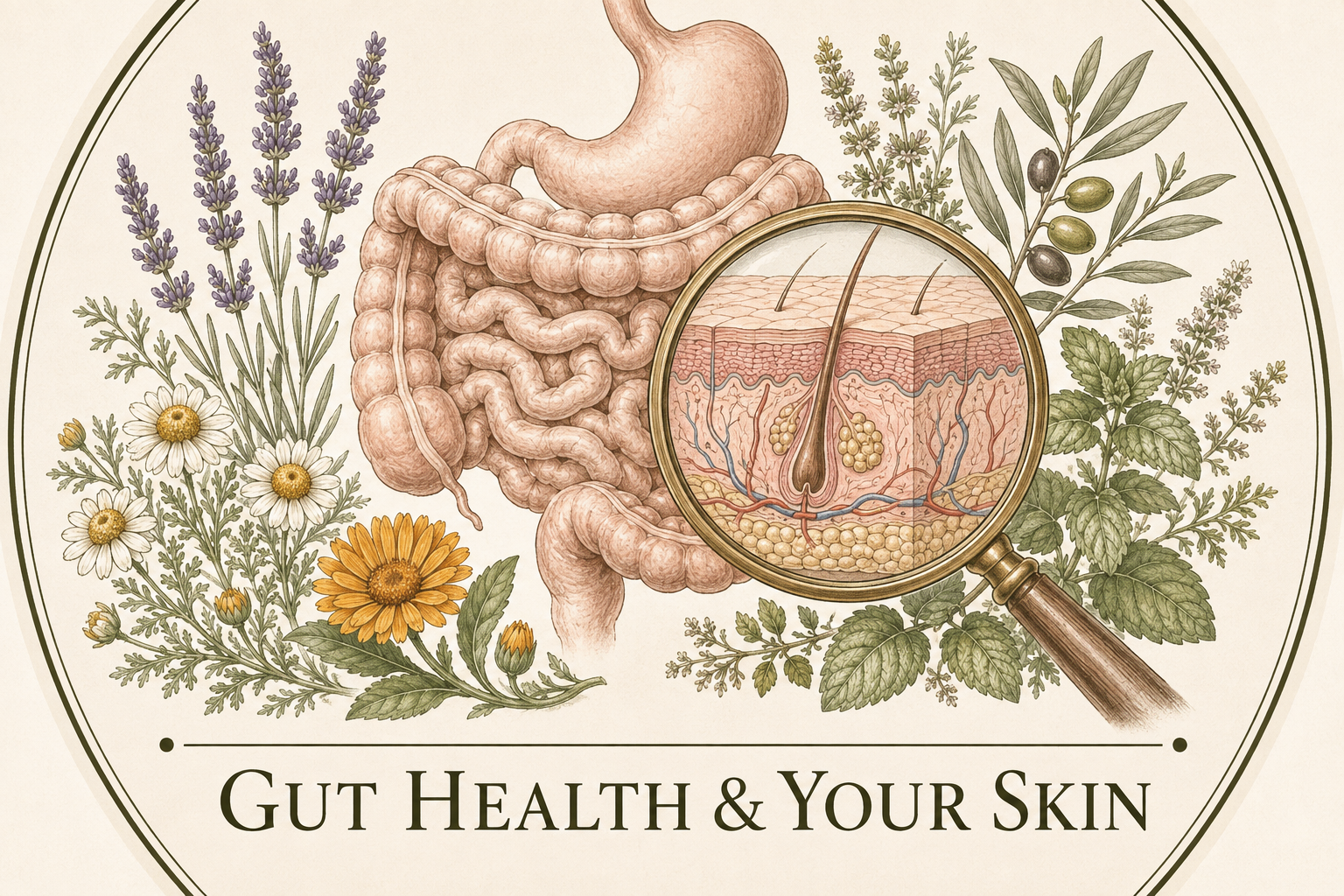
We often think of skin health as something we care for from the outside — with cleansers, creams, serums and carefully chosen ingredients.
But our skin does not exist separately from the rest of the body. It is influenced by nutrition, digestion, immune function, stress, sleep, hormones, genetics, environment and the products we use each day.
One area receiving increasing attention is the relationship between the digestive system and the skin, often referred to as the gut–skin connection.
What is the gut–skin connection?
The gut–skin connection, or gut–skin axis, describes the many ways the digestive system, gut microbiome, immune system and skin may communicate with one another.
The gut microbiome is the community of microorganisms that lives within the digestive tract. These microorganisms help process components of our food, produce useful compounds and interact with the intestinal lining and immune system.
The skin also has its own unique microbiome. Both ecosystems are shaped by factors such as diet, stress, medications, hormones, sleep, environment and lifestyle.
This doesn’t mean that every breakout, rash or skin concern begins in the gut. Skin conditions are complex and usually involve several contributing factors. Gut health may be one part of the picture rather than the entire explanation.
How might the gut influence the skin?
The digestive system helps us break down food and access nutrients needed throughout the body, including those used to maintain healthy skin.
When gut bacteria ferment certain fibres, they produce compounds known as short-chain fatty acids. These compounds help nourish cells within the colon and support the intestinal environment.
The gut microbiome also communicates with the immune system. Because immune activity plays a role in many inflammatory skin conditions, researchers are continuing to explore how changes within the gut may relate to changes seen in the skin.
Stress provides another important connection. Ongoing stress can influence digestion, bowel habits, sleep, food choices and skin sensitivity at the same time. This can make it difficult to separate one factor from another.
Does gut dysbiosis cause skin problems?
Gut dysbiosis describes an unfavourable change in the composition or function of the gut microbiome.
Research has identified differences in the gut microbiomes of some people living with conditions such as acne, eczema, rosacea and psoriasis. However, this does not mean that dysbiosis is the sole cause of these conditions or that everyone with a skin concern has an imbalanced microbiome.
An association tells us that two things may occur together. It does not necessarily tell us which came first or whether one directly caused the other.
There is also no single microbial pattern shared by everyone with a particular skin condition. Genetics, immune activity, medications, skincare, hormones, allergens, climate and environmental exposures may all be relevant.
For this reason, skin concerns should never be reduced to the idea that someone simply needs to “fix their gut.”
When might the gut be worth considering?
It may be helpful to explore digestive health when a skin concern occurs alongside:
- Persistent bloating or abdominal discomfort
- Constipation, diarrhoea or changing bowel habits
- A recent gastrointestinal infection
- Recent or repeated antibiotic use
- Significant food restriction
- Difficulty tolerating a wide range of foods
- Concerns about nutrient intake or absorption
- Ongoing stress and disrupted sleep
These experiences do not confirm dysbiosis, but they can provide useful context when looking at the whole person.
Food, the microbiome and healthy skin
There is no single “perfect” gut or skin diet.
A supportive eating pattern is generally one that provides enough energy, protein, essential fats, fibre and a broad range of nutrients. Variety is often more helpful than trying to find one miracle food.
Depending on individual needs and tolerance, gentle foundations may include:
- A colourful variety of vegetables and fruit
- Whole grains and legumes
- Nuts and seeds
- Herbs and spices
- Sources of omega-3 fatty acids
- Adequate protein
- Fermented foods, if they are well tolerated
- Enough water throughout the day
Plant foods provide different types of fibre and naturally occurring compounds that help nourish a diverse gut microbiome.
If digestion is sensitive, suddenly increasing fibre or fermented foods may lead to more bloating or discomfort. Changes can be introduced slowly and adjusted according to individual tolerance.
Be cautious with restrictive diets
When skin is unsettled, it can be tempting to remove multiple foods at once. While a professionally guided elimination diet may occasionally be appropriate, unnecessary restriction can reduce dietary variety and make it more difficult to meet nutritional needs.
It can also create anxiety around eating without identifying what is genuinely contributing to symptoms.
Rather than assuming that gluten, dairy, sugar or another food is responsible, it is important to consider the person’s complete symptom pattern and medical history.
Food reactions, allergies and intolerances are not interchangeable, and suspected allergies should be assessed appropriately.
What about probiotics and supplements?
Probiotics are sometimes promoted as a universal solution for skin health, but their effects are strain-specific. A product that may be useful in one situation will not necessarily be appropriate in another.
Research into probiotics and the gut–skin axis is promising, but it is still developing. There is currently no single probiotic that suits every person or every skin concern.
The same care should be taken with nutritional supplements, herbal antimicrobials and intensive “gut protocols.” More is not always better, and treatment should have a clear purpose rather than being based on the assumption that every skin concern requires a cleanse.
Can gut testing explain a skin concern?
Comprehensive stool testing may provide useful information when someone has persistent digestive symptoms or a health history that supports further investigation.
However, a stool test cannot prove that the gut is causing a skin condition. Results need to be interpreted alongside symptoms, diet, medications, medical history and other relevant pathology.
Testing is most valuable when it is selected to answer a specific clinical question — not simply because the skin is breaking out.
Supporting the gut and skin together
A gentle whole-person approach may include:
- Eating regular, balanced meals
- Increasing plant variety gradually
- Supporting comfortable and regular bowel habits
- Prioritising restorative sleep
- Finding realistic ways to reduce ongoing stress
- Moving the body regularly
- Avoiding smoking and excessive alcohol intake
- Using simple, gentle skincare
- Protecting the skin from excessive sun exposure
- Seeking appropriate medical or dermatological care
Supporting digestive health does not replace good skincare or medical treatment. The skin may need direct care while broader contributing factors are explored.
A gentler perspective on skin health
Your skin is not a report card for how “clean” your diet is — and a flare does not mean you have failed to care for yourself properly.
Skin changes can be frustrating, especially when the cause is unclear. Looking at the gut–skin connection can offer another piece of information, but it should never lead to blame, fear around food or the promise of a quick cure.
The aim is to understand your individual patterns, support the foundations of health and give both the gut and skin the time and care they need.
How Sarah can help
Sarah considers digestion as part of the whole picture rather than treating skin concerns in isolation. In a consultation she explores your health history, diet, bowel patterns, sleep, stress and the products and medications you use — alongside any relevant pathology or functional testing, where appropriate.
She can help you build gentle, sustainable foundations for both gut and skin, and will work alongside your GP or dermatologist when medical care is needed. To begin, book a naturopathic consultation.
When to seek professional support
Speak with your GP or dermatologist if a skin concern is persistent, painful, rapidly worsening, causing scarring or showing signs of infection.
Seek urgent medical assistance for a rapidly spreading rash, swelling of the face or throat, difficulty breathing, blistering, or a rash accompanied by significant fever or illness.
If skin changes occur alongside ongoing digestive symptoms, a qualified practitioner can help explore your health history, diet, bowel patterns and whether further investigation may be appropriate.
This journal entry is intended for general education and wellbeing support. It is not a substitute for personalised medical advice, diagnosis or treatment.