
Your Cycle Is a Conversation
A nurturing naturopathic guide to hormones, the endocrine system and personalised care — education to help you understand your body and ask better questions, not a diagnosis or a prescription.
A note from Sarah
Sometimes a woman sits down with me and says, “I know something has changed — I just don't know how to explain it.”
Maybe her period has become heavier. Maybe she feels anxious or flat in the days before it arrives. Perhaps sleep, skin, energy, appetite or libido no longer feel like her own. Often she has already been told that her results are “normal”, or that difficult periods are simply part of being a woman.
I want this journal to offer a different experience: one that is soft, sensible and deeply respectful of what you are noticing. Your symptoms are real. They may be influenced by hormones, but they are not proof that your body is broken. They are information — and information becomes useful when we place it in context.
As a naturopath and herbalist, my role is to listen carefully, look for patterns, support the foundations of health, use herbal or nutritional medicine thoughtfully when it is appropriate, and recognise when medical investigation or referral is the safest next step. Good naturopathic care should sit comfortably beside good medical care.
Your endocrine system is a conversation
Hormones are chemical messengers. They travel through the blood, meet receptors in tissues and help different parts of the body coordinate what happens next.
The endocrine system includes glands and hormone-producing tissues such as the hypothalamus and pituitary in the brain, the thyroid, adrenal glands, pancreas and ovaries. Together they influence reproduction, metabolism, growth, sleep, stress responses, temperature, bone health, mood and much more.
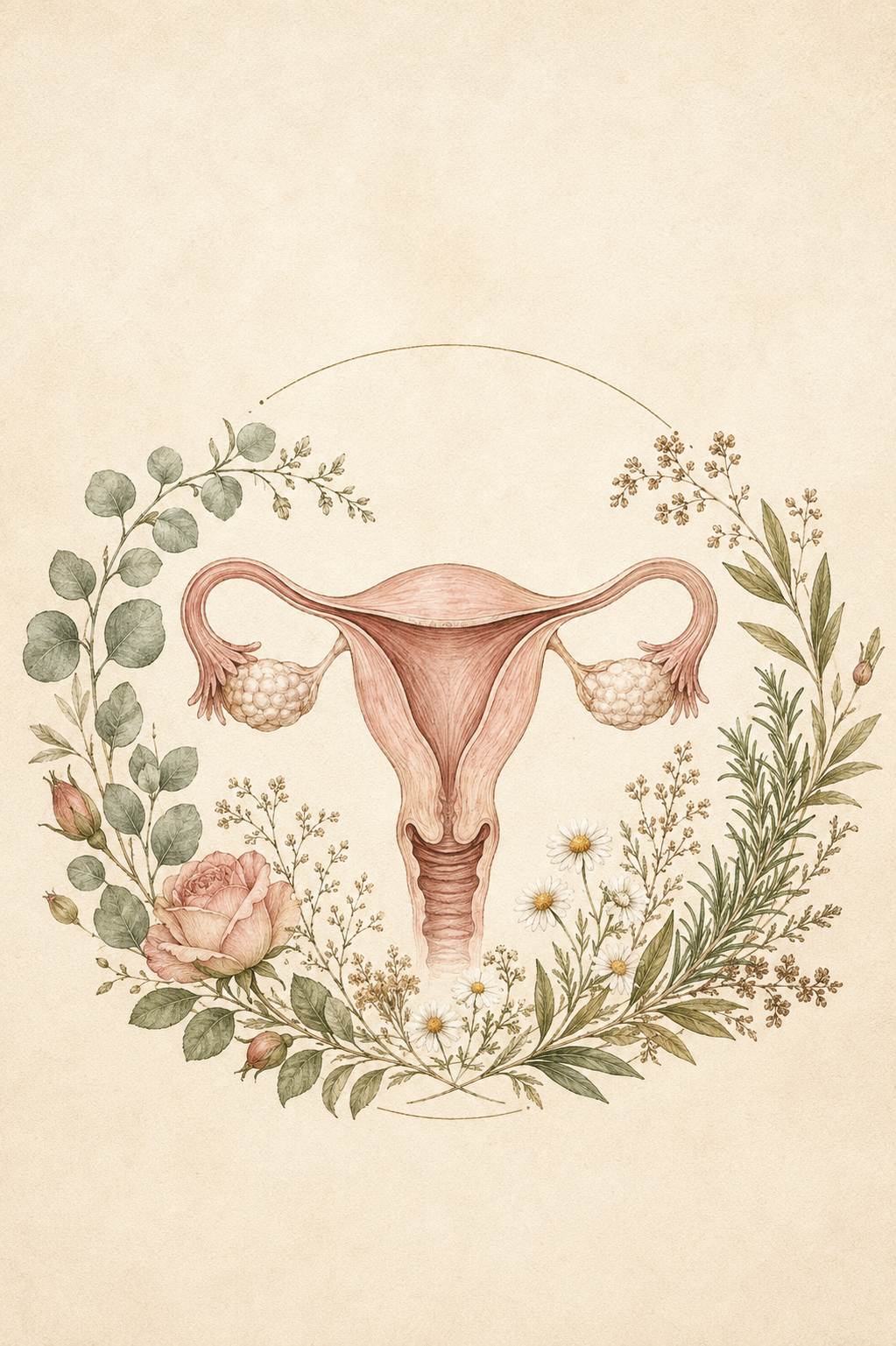
The menstrual cycle is guided by a feedback loop often called the hypothalamic–pituitary–ovarian, or HPO, axis. The hypothalamus releases GnRH in pulses. The pituitary responds with follicle-stimulating hormone (FSH) and luteinising hormone (LH). These signals guide the ovaries as follicles develop, ovulation occurs and oestrogen and progesterone rise and fall. Those ovarian hormones then feed information back to the brain.
The monthly rhythm: four phases, one connected cycle
A 28-day cycle is an average, not a rule. Your cycle is counted from the first day of one period to the day before the next, and healthy timing can vary from woman to woman and across life stages.
1. Menstruation — the bleed
Day 1 is the first day of full menstrual bleeding. When pregnancy has not occurred, oestrogen and progesterone fall and the uterine lining is shed. A period commonly lasts several days. Mild cramping and a change in energy can occur, but pain, flooding or exhaustion that disrupts daily life deserves attention.
2. Follicular phase — building
FSH supports a group of ovarian follicles; usually one becomes dominant. As that follicle develops, oestrogen rises and the uterine lining begins to rebuild. Cervical fluid may become wetter and more slippery as ovulation approaches. This phase is often the most variable part of the cycle, which is why ovulation does not reliably land on day 14.
3. Ovulation — release
A sustained rise in oestrogen helps trigger a surge in LH, and an egg is released from the ovary. Some women notice fertile cervical fluid, a small rise in basal body temperature afterwards or brief one-sided discomfort. Others notice nothing at all. An app predicts ovulation; it does not confirm it.
Ovulation is relevant beyond fertility because it creates the corpus luteum — the temporary structure that produces most progesterone in the luteal phase.
4. Luteal phase — preparing
After ovulation, the corpus luteum produces progesterone and some oestrogen. These hormones support the uterine lining. If pregnancy does not occur, the corpus luteum winds down, hormone levels fall and the next period begins. Premenstrual changes can occur, but severe mood symptoms, disabling pain or a marked loss of function are not something you should simply tolerate.
The endocrine cast
Think of the endocrine system less like a row of separate switches and more like an orchestra: each section has its own role, but timing and communication shape the whole piece.
Hypothalamus + pituitary
These brain-based control centres coordinate many endocrine pathways. In the menstrual cycle they use GnRH, FSH and LH to communicate with the ovaries. Prolactin is also made by the pituitary; when it is higher than expected, it can disrupt ovulation and periods and may cause breast milk production outside breastfeeding.
Ovaries
The ovaries produce oestrogens, progesterone and androgens. Oestrogen supports the uterine lining and also influences bone, brain, skin, blood vessels and other tissues. Progesterone rises after ovulation and prepares the uterine lining. Androgens, including testosterone, are normal in women and contribute to sexual function, muscle and bone; higher levels can be associated with acne, increased facial or body hair and irregular ovulation.
Thyroid
Thyroid hormones help regulate energy use, temperature, heart rate and many other processes. Both underactive and overactive thyroid conditions can affect bleeding, cycle timing, fertility, mood, bowels, hair and energy. Because those symptoms overlap with many other concerns, thyroid testing is sometimes an important early step.
What people mean by “hormonal imbalance”
In practice, the phrase may point to one or more very different situations:
- Ovulation is not happening regularly, so the usual oestrogen–progesterone rhythm is altered.
- A hormone is higher or lower than expected for that person, life stage or point in the cycle.
- The body is unusually sensitive to normal hormonal changes, as can happen with severe premenstrual symptoms or PMDD.
- Another endocrine signal — such as thyroid hormone, prolactin or insulin — is affecting the cycle.
- A structural condition such as fibroids, adenomyosis or polyps is causing bleeding or pain that feels 'hormonal'.
- A normal transition such as puberty, postpartum, breastfeeding or perimenopause is changing the rhythm.
- Medication, hormonal contraception, under-fuelling, high training load, illness or stress is influencing the cycle.
Four hormone myths worth releasing
Myth: 28 days is the only healthy cycle. Reality: twenty-eight days is an average. Your usual pattern, symptoms and meaningful changes are more useful than perfection.
Myth: PMS always means low progesterone. Reality: PMS is multifactorial. Timing, nervous-system sensitivity, mood health, sleep, stress, medicines and other conditions can all matter.
Myth: One panel can reveal the root cause. Reality: hormones fluctuate. Collection timing, contraception, age and the clinical question change what a result means.
Myth: Natural means gentle for everyone. Reality: herbs and nutrients can have side effects and interactions. Individual prescribing and follow-up are part of safe care.
Instead of asking, “Which hormone is broken?” we can ask, “What pattern is present, what could explain it, what needs medical assessment, and what support is both safe and meaningful?”
Common patterns — and what may sit beneath them
These are possibilities, not conclusions. The same symptom can have several causes, and more than one factor may be present at once.
Irregular, infrequent or absent periods
A cycle that suddenly changes, regularly falls outside your usual range or disappears deserves a thoughtful review. Pregnancy is always considered first when possible.
What may sit beneath it: PCOS/PMOS, thyroid conditions, elevated prolactin, under-fuelling or substantial weight change, high training load, psychological stress, perimenopause, postpartum or breastfeeding, hormonal contraception, medicines, chronic illness or premature ovarian insufficiency.
How Sarah can help: map the timeline, review energy intake and training, screen for red flags and arrange or recommend appropriate pathology and GP review. Support may include nutrition, sleep and stress care, and an individual herbal or nutrient plan only after the likely pattern is clearer.
Heavy or prolonged bleeding
Heavy bleeding can look like changing protection every one to two hours, flooding through clothing or bedding, passing large clots, bleeding for more than about a week, or being unable to do usual activities. Fatigue, dizziness, paleness or breathlessness may suggest iron deficiency or anaemia.
What may sit beneath it: cycles without ovulation, perimenopause, fibroids, adenomyosis, endometriosis, uterine polyps, thyroid conditions, bleeding disorders, pregnancy-related causes or medicines such as anticoagulants. Heavy bleeding is not automatically “too much oestrogen”.
How Sarah can help: prioritise medical assessment and iron status where indicated, help you document flow and symptoms, support nourishing intake and recovery, and work alongside your GP or gynaecologist. Herbal medicine should never be used to delay investigation of unexplained heavy bleeding.
Painful periods or pelvic pain
Some cramping can occur as prostaglandins help the uterus contract, but pain that stops work, school, sleep, movement or sex is not something you should be expected to normalise.
What may sit beneath it: primary dysmenorrhoea, endometriosis, adenomyosis, fibroids, ovarian cysts, pelvic inflammatory disease or other pelvic, bowel, bladder or musculoskeletal causes.
How Sarah can help: take the pain pattern seriously, ask about bowel, bladder, sexual and bleeding symptoms, identify urgent or referral needs, and support symptom tracking. Nutrition, heat, movement, nervous-system care and selected herbal or nutritional strategies may complement — not replace — appropriate diagnosis and medical management.
PMS, PMDD and feeling unlike yourself
Premenstrual symptoms occur in the luteal phase and settle after the period begins. PMDD is more severe and can bring intense mood change, irritability, anxiety, depression or a sense of being unable to cope.
What may sit beneath it: sensitivity to normal ovarian hormone fluctuation, mental health factors, sleep disruption, stress, thyroid or iron concerns, medication effects and other overlapping conditions. Severe symptoms are not proof of a simple progesterone deficiency.
How Sarah can help: use prospective symptom tracking across at least two cycles, assess safety and daily impact, support sleep, food and stress foundations, and collaborate with a GP, psychologist or psychiatrist where appropriate. If there are thoughts of self-harm or suicide, urgent mental health support comes first.
Acne, hair changes and signs of higher androgens
Persistent jawline acne, increased facial or body hair, scalp hair thinning or irregular periods can be distressing and deserve a non-judgemental assessment.
What may sit beneath it: PCOS/PMOS, medication effects, thyroid or iron concerns, genetics, dermatological conditions and, less commonly, other ovarian or adrenal causes. A rapid or marked change requires prompt medical assessment.
How Sarah can help: consider the full reproductive and metabolic picture, recommend appropriate androgen, thyroid, glucose or nutrient testing through the right pathway, and work collaboratively with medical and dermatology care. Treatment should never reduce a woman to her weight or appearance.
Perimenopause
Perimenopause is the transition before the final menstrual period. Ovulation becomes less predictable and hormone levels can fluctuate, so periods may become closer together, further apart, heavier, lighter or occasionally absent. Sleep, temperature, mood, cognition, migraine, vaginal comfort and libido may also change.
How Sarah can help: centre symptoms and quality of life, review cardiometabolic and bone-health foundations, support sleep and nutrition, discuss evidence-informed complementary options, and encourage GP care for medical treatments such as menopausal hormone therapy when a woman wants to explore them. Routine hormone testing is often not helpful for diagnosing typical perimenopause between about 45 and 55.
Testing: choose the question before the panel
The best test is the one that changes a decision. Sometimes the most valuable first step is not a speciality panel — it is a careful history, a pregnancy test, a full blood count, thyroid testing, iron studies or an ultrasound arranged through medical care.
What Sarah may want to understand first
- When did the pattern begin, and what was happening around that time?
- Are cycles regular, is ovulation likely, and how heavy or painful is bleeding?
- Are symptoms cyclical or present all month?
- Is pregnancy possible, desired or being avoided?
- What medicines, hormonal contraception, supplements and herbs are being used?
- Are there thyroid, metabolic, iron, prolactin, pelvic or mental health clues?
- What would we do differently if the result were high, low or normal?
Timing changes meaning
Cycle hormones do not stay still. A progesterone test used to investigate ovulation is usually timed to the mid-luteal phase — around seven days before the next expected period — rather than automatically on calendar day 21. Results can also be changed by pregnancy, breastfeeding, perimenopause, hormonal contraception and other medicines. This is why Sarah reads a result as one part of a timeline, not as a verdict.
Where functional pathology may fit
Sarah has practitioner access to NutriPATH, which lists options such as female hormone profiles, multi-sample cycle mapping, dried urine hormone-metabolite profiles and cortisol-related saliva or urine profiles. In selected cases, one of these may add information to a clearly defined question.
Specialised functional testing is not automatically first-line, does not replace standard medical investigation and should not be used to diagnose every symptom as a hormone problem. You can read more in Functional Pathology Testing Explained.
How Sarah can support you
The goal is not to “balance hormones” with a shelf of products. It is to understand your pattern, protect your safety and build the smallest useful plan around what matters to you.
- Listen deeply. A 75–90 minute consultation allows space for your cycle timeline, symptoms, medical history, medicines, contraception, fertility intentions, food, sleep, stress, movement, digestion and lived experience.
- Screen for what must not be missed — red flags, pregnancy-related concerns, mental health risk, iron deficiency, severe pain and patterns that need GP, gynaecology or endocrinology referral.
- Form a working picture, connecting the cycle with thyroid, metabolic, stress, nutritional and life-stage clues while staying open to more than one explanation.
- Choose focused support: food and meal structure, restorative sleep and movement, nervous-system support, herbal medicine, practitioner nutrients, pathology or referral — only the pieces that are justified.
- Review and refine, following the symptoms that matter to you rather than leaving a plan on autopilot.
Sarah's practitioner toolkit
Practitioner access offers more quality-controlled choices and clinical information. It does not mean every client needs a product, a complex formula or an expensive test. Sarah works with NutriPATH for selected functional and integrative pathology; MyIntegria and MediHerb for practitioner herbal and nutritional ranges; MyPatient Ordering for convenient patient dispensing; the Herbal Extract Company of Australia for bespoke liquid formulas; and Metagenics for practitioner-grade nutrients.
Availability and ranges change, so Sarah checks current practitioner information at the time of prescribing. Brand access never replaces clinical judgement: the person and the safety question come first. There is more on this in Practitioner-Only Herbal Medicine.
What thoughtful herbal prescribing looks like
Sarah may use a single herb or create a blend based on the dominant pattern, life stage, treatment goals, preparation type and the evidence or traditional use relevant to that herb. This is not a do-it-yourself list: the same herb can be helpful for one woman and unsuitable for another. Before prescribing, she considers:
- pregnancy, trying to conceive or breastfeeding
- hormonal contraception or menopausal hormone therapy
- antidepressants, anticoagulants, thyroid medicines and other prescriptions
- blood pressure, liver or kidney conditions, migraine and seizure history
- planned surgery, allergies and previous reactions
- dose, preparation, duration and a clear review point
Gentle foundations that matter
The endocrine system responds to the wider conditions of your life. Foundations are not a cure-all, but they create the steadier ground from which good investigation and treatment can work.
- Eat enough, regularly. Long gaps, restrictive diets and chronic under-fuelling can be stressors — without rigid 'hormone diets'.
- Let iron earn special attention. Heavy bleeding can deplete iron; significant deficiency needs proper assessment and follow-up rather than blind supplementation.
- Protect sleep without blaming yourself. Sleep is affected by stress, caring responsibilities, pain, temperature, mood and life stage.
- Move in a way that gives back. If the cycle has disappeared alongside intense exercise or under-fuelling, more training is not the answer.
- Track patterns, not performance. Two or three cycles of notes can reveal timing; tracking should reduce confusion, not police your body.
- Make room for emotional care. Psychological support is not a dismissal of physical symptoms — it can be essential whole-person care.
Your cycle story — a page to bring to your appointment
Write what is true, not what you think should be true. A few honest observations can be more useful than a perfect month of data. You might note:
- The change that made me start paying attention was…
- The symptoms that most affect my daily life are…
- I tend to feel most like myself when… and I struggle most when…
- My bleeding is usually… and pain changes my day by…
- What I have been told is 'normal', but does not feel normal to me…
- The main question I want answered is…
Before we meet
- the first day of your last two or three periods and your usual cycle length
- how many days you bleed and what 'heavy' looks like for you
- pain location, timing, severity and what it stops you doing
- mood, sleep, skin, hair, digestion, appetite, energy and temperature changes
- current medicines, hormonal contraception, supplements and herbs
- recent blood tests, scans or specialist letters
- pregnancy, fertility and contraception intentions — only what you are comfortable sharing
- the one outcome that would make care feel worthwhile
When not to wait
Naturopathic care is not the right first step for every symptom. Please seek urgent or prompt medical help when your body is signalling that something may be unsafe.
Call Triple Zero (000) or go to emergency care
- very heavy vaginal bleeding with fainting, severe dizziness, weakness, breathlessness or feeling acutely unwell
- sudden severe pelvic or abdominal pain, especially with nausea, faintness or heavy bleeding
- bleeding or strong pain when pregnancy is possible or confirmed, particularly with shoulder-tip pain or light-headedness
- thoughts of suicide, self-harm or being unable to stay safe; if life is in danger, call 000
Arrange timely GP or medical review
- bleeding between periods, after sex or after menopause
- periods that are newly much heavier, last longer than about a week or repeatedly disrupt normal activities
- no period for three months or more when not pregnant, or eight or fewer periods in a year
- period pain that stops work or school, is worsening, or occurs between periods, during sex, urination or bowel movements
- new breast milk production when not breastfeeding, severe headaches or visual changes
- rapid new facial hair growth, voice change or other marked androgen-related changes
- possible iron deficiency: persistent fatigue, paleness, dizziness, racing heart or breathlessness
- premenstrual mood symptoms that significantly affect relationships, work, functioning or safety
Your body is not asking for perfection
A healthy relationship with your cycle is not measured by how gracefully you tolerate discomfort, how accurately you predict ovulation or how perfectly you live in every phase.
It may simply begin with noticing: this pain is changing my life; this bleeding is leaving me depleted; this mood shift feels frightening; this absence of a period deserves an explanation; this transition is asking for more support than I have been given.
There are many possible paths forward. Sometimes the next step is a GP appointment or ultrasound. Sometimes it is iron, thyroid or metabolic investigation. Sometimes naturopathic support — food, rest, herbal medicine, nutrients and careful follow-up — adds a gentle, useful layer. Often, good care is a combination.
You are allowed to be curious about your hormones without blaming them for everything. You are allowed to seek natural support without refusing medical care. And you are allowed to ask for help before you are at the end of your strength.
If you would like a conversation about your own cycle, request an appointment or read more about naturopathic care at Wild Wellness.
Important information
This journal is general education for adults. It does not provide personal medical advice, diagnosis or treatment and is not a substitute for care from your GP, specialist, pharmacist, psychologist or other qualified health professional. Do not start, stop or change prescribed medicines or hormonal treatments without the prescriber's guidance. Herbal and nutritional medicines can interact with medicines and may be unsuitable in pregnancy, breastfeeding, before surgery or with particular health conditions. If symptoms are severe, new, worsening or concerning — especially heavy bleeding, fainting, severe pain, pregnancy-related bleeding or thoughts of self-harm — seek urgent medical help.